Physical Address
304 North Cardinal St.
Dorchester Center, MA 02124
Physical Address
304 North Cardinal St.
Dorchester Center, MA 02124

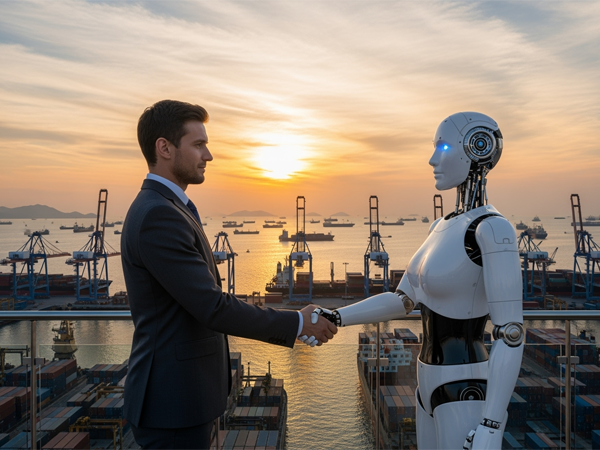
Discover how artificial intelligence is reshaping global export operations, from predictive analytics to automated compliance in 2025-2026.
Global Export Trade starts at the loading dock at Mumbai’s Nhava Sheva port tells a story that would have seemed like science fiction just five years ago. Where customs officers once spent hours reviewing paperwork, artificial intelligence systems now process documentation in seconds. A colleague of mine who runs a textile export business recently shared how his company reduced customs clearance time from three days to mere hours; not through connections or bribes, but through smart AI integration.
This isn’t an isolated incident. According to the WTO’s 2025 Trade Report, AI could boost global trade by nearly 40% by 2040 if technological gaps are bridged between economies. For exporters in emerging markets like India, this presents both unprecedented opportunities and critical challenges.
Picture this: A small manufacturer in Ludhiana ships machine parts to Germany. Previously, the process involved coordinating with freight forwarders, manually checking export compliance lists, preparing customs declarations, and hoping nothing went wrong. Today, AI systems handle most of these tasks automatically.
AI-powered chatbots and virtual assistants now enable exporters to provide 24/7 customer support to international buyers, building trust and allowing small exporters to compete professionally with larger companies. This levels the playing field in ways trade liberalization never quite managed.
But here’s what the statistics don’t capture: the human element. When my friend Rajesh upgraded his spice export business with AI logistics tools, he didn’t fire his logistics manager. Instead, that manager now focuses on building relationships with new distributors in Dubai and London, while AI handles the routine tracking and documentation.
Research shows that a one standard deviation increase in AI exposure is associated with a 31 percent rise in exports on average. These aren’t just numbers on a spreadsheet; they represent real businesses capturing new opportunities.
AI-driven predictive analytics help exporters answer questions that previously required expensive consultants: Which markets will demand more of our products next quarter? When should we stockpile raw materials? Which shipping routes will face disruptions?
Consider the case of a footwear manufacturer in Agra. By analyzing weather patterns, festival calendars, and social media trends across target markets, their AI system predicted a surge in demand for traditional mojaris in the UK three months before it happened. They scaled production accordingly and captured market share from competitors who were caught off guard.
We believe the technology plays a vital role as well check out our website: Lord Export Import
Anyone who’s dealt with export compliance knows it’s a nightmare of acronyms and regulations. ITAR, EAR, OFAC, BIS the alphabet soup is endless. Miss one detail, and you could face fines that dwarf your profit margins.
AI-integrated compliance platforms can automatically track regulatory updates across jurisdictions and update company systems in real-time, helping traders stay current with the latest rules. This is particularly valuable for small and medium enterprises that can’t afford dedicated compliance teams.
A ceramic exporter I know in Khurja nearly lost a major US contract because he didn’t realize obscure pottery import regulations had changed. Now, his AI compliance tool flags such changes automatically. He sleeps better at night.
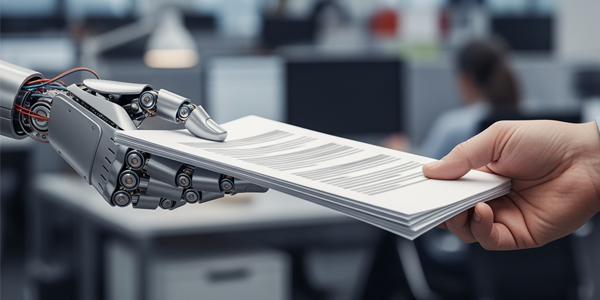
AI tools can suggest the fastest and cheapest shipping routes based on weather, traffic, and port congestion, with companies like Flexport and Project44 using AI to transform global logistics. This optimization extends beyond simple cost savings.
During the Red Sea shipping crisis in early 2025, exporters using AI logistics platforms could dynamically reroute shipments before disruptions hit. Those relying on traditional methods often saw their goods stuck at ports for weeks.
Think of AI in logistics like having a seasoned ship captain who knows every port, every trade wind, and every potential hazard except this captain never sleeps and monitors thousands of variables simultaneously.
Also read: Indian Handicrafts: The Whisper of Tradition in Global Market
If you’ve ever filled out export documentation manually, you know it’s tedious work prone to costly errors. A misplaced decimal point or incorrect HS code can delay shipments and trigger inspections.
AI tools now automate invoices, customs declarations, and compliance checks, reducing clearance times and helping startups avoid costly penalties. This automation doesn’t just save time; it reduces the anxiety that comes with international trade.
My own experience exporting software services taught me that documentation is where most deals die. Not from bad products or poor negotiation, but from paperwork errors. AI is the antidote to this bureaucratic poison.
Traditional market research meant hiring consultants, attending trade shows, or making expensive exploratory trips. AI tools help exporters create personalized marketing campaigns for buyers in different countries, which is especially powerful for B2B exporters on platforms like Amazon Global or Alibaba.
A handicraft cooperative in Rajasthan used AI market analysis to discover that their products were trending in Scandinavia a market they’d never considered. Within six months, Sweden became their third-largest export destination.
Here’s the uncomfortable truth: Most companies are unprepared for the AI revolution in physical product design and development, with engineers often lacking foundational data science skills. This skills gap is more pronounced in emerging economies.
The solution isn’t just training programs, though those help. It’s about integrating AI tools that are intuitive enough for people without technical backgrounds. The best AI export tools work invisibly, augmenting human capability rather than replacing it.
By 2026, AI in exports won’t be a competitive advantage it’ll be table stakes. Businesses that adopt AI gain a competitive edge in efficiency and global reach, with reduced entry barriers allowing startups to access real-time trade insights without needing big teams.
The exporters thriving in 2026 will be those who embraced AI in 2025. They’ll have cleaner data, faster operations, better compliance records, and deeper market insights than their competitors.
But technology alone isn’t the answer. Success requires combining AI’s analytical power with human judgment, cultural understanding, and relationship-building skills. The future of export trade is neither fully human nor fully automated it’s intelligently hybrid.
Check out our product page: Click here
Start small. Choose one pain point in your export process maybe customs documentation or freight route optimization and implement an AI solution for that specific problem. Learn from it. Then expand.
Don’t wait for perfect circumstances or complete understanding. The companies writing export success stories in 2026 are those making imperfect progress today. The port is open, the ship is boarding, and AI is your ticket to navigating tomorrow’s trade waters.
The question isn’t whether AI will transform export trade; it already has. The question is whether your business will transform with it.
Reach us on Linkedin: Linkedin Link
Keywords: AI export automation, export trade technology 2026, automated customs clearance, predictive analytics exports, AI logistics optimization, export compliance automation, cross-border trade AI, smart export solutions, digital export transformation